
Open-Book Exam Source Sheet and Citation Map Study Plan
Build an open-book exam source sheet that supports retrieval, citation integrity, accessibility, and privacy without copying the whole course.

Open-Book Exam Source Sheet and Citation Map Study Plan
A useful open-book exam source sheet and citation map is not a shopping list. It is a small decision system: what to check first, what to leave alone, what to document, and when to ask a qualified person for help. This guide is current as of 2026-06-30 and uses official safety, education, or public-service sources where the advice touches health, safety, privacy, or household risk.
Quick decision table
| Situation | Do this first | Avoid this |
|---|---|---|
| You have ten minutes | Make one visible baseline check and write down the next action | Buying a product before knowing the failure point |
| A safety rule is unclear | Use the conservative option and keep exits, cords, water, privacy, or citations clean | Guessing because the setup looks ordinary |
| Someone else uses the space | Leave a short plain-language note and remove confusing labels | Building a routine only you understand |
| The routine fails twice | Simplify the setup and decide who owns the next check | Adding more reminders to a broken process |
Why this matters now
Summer schedules, travel, heat, and end-of-term deadlines all make small household or study systems easier to neglect. The strongest routine is the one that works on a tired day. It should be visible, reversible, and easy to verify without opening an app full of assumptions. If a device, room layout, or study sheet creates more confusion than it removes, the first improvement is not another tool; it is a clearer boundary.

Step 1: define the narrow job
Write one sentence that describes the job. For this topic, the job is: turn allowed course sources into a fast retrieval map without copying restricted material or exposing private student information. That sentence prevents scope creep. It also gives you a way to say no to decorative extras that look productive but do not reduce risk. Keep the sentence near the setup, in a notebook, or in a private checklist. Do not include passwords, account numbers, private student data, or personal schedules that another person does not need to see.
Step 2: create a baseline before changing anything
Spend a few minutes observing the current state. Photograph only your own setup if that is appropriate, and avoid sharing private details. Note what is working, what is unreliable, and which part of the routine you already skip. A baseline can be as simple as a date, a condition, and one next action. The point is not perfect tracking. The point is to avoid solving the wrong problem.
Step 3: build the low-friction layout
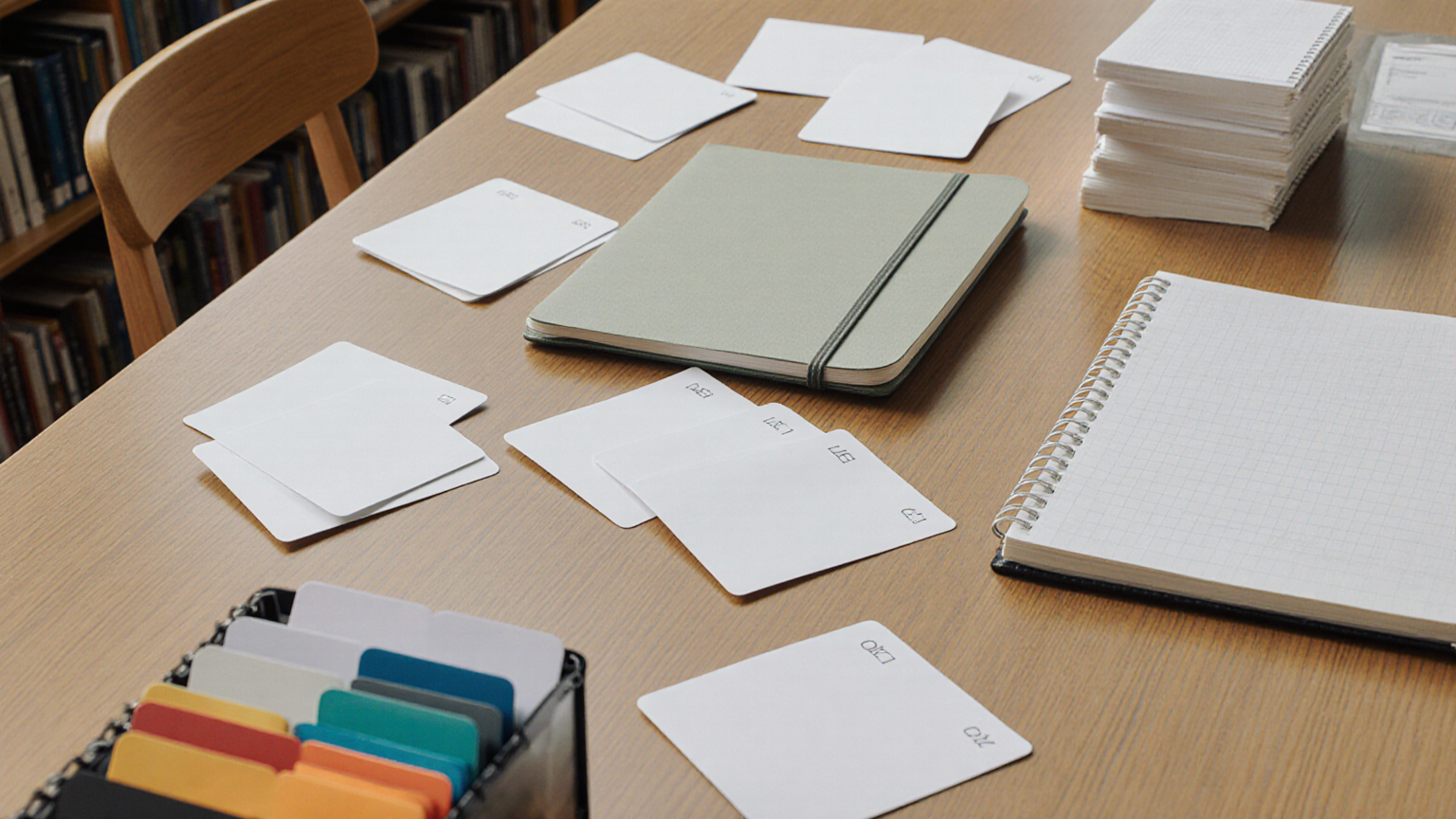
Put the most important cue where the action happens. A battery reminder belongs near the sensor, a curtain tieback belongs at the window, and a source map belongs beside the reading material rather than buried in a general notes app. The layout should preserve walkways, airflow, access, and privacy. If the setup blocks a door, hides a valve, tangles a cord, or exposes private course notes, redesign it before calling it finished.
Checklist for a safer routine
- One owner is named for the next check.
- The setup can be reset in less than five minutes.
- A visitor, roommate, or family member can understand the visible cue without reading private information.
- Safety sources are used for safety claims; personal preference is labeled as preference.
- The routine has a stop rule: if it feels unsafe, confusing, or beyond your role, ask the appropriate professional, instructor, landlord, manager, or service provider.

Step 4: run the two-minute drill
A drill is not a performance. It is a short rehearsal that reveals friction. Touch the item you would use, name the next step aloud, and confirm that the path is not blocked. If the drill involves household safety, do not force stuck valves, overload outlets, or move heavy furniture alone. If the drill involves schoolwork, do not copy restricted exam material or upload course content to unapproved tools. The point is to practice the decision path without creating a new risk.
Step 5: document the minimum evidence
Good evidence is small and specific. Record the date, what changed, and the next review date. Keep private details out of public notes. For household topics, evidence might be a blank card, a maintenance log, or a reminder in a private calendar. For study topics, evidence might be a citation key, a source title, and a page or module reference that follows your course rules. Do not turn the system into a surveillance project.
Troubleshooting
| Problem | Likely cause | Better fix |
|---|---|---|
| You ignore the reminder | It is placed away from the action | Move the cue to the decision point |
| The setup looks neat but fails | It solves appearance, not the real risk | Re-run the baseline and remove decorative steps |
| Another person is confused | The routine depends on memory | Add a simple owner/date note without private data |
| Advice conflicts | Sources cover different contexts | Follow the stricter safety boundary and ask the right authority |
Reader trust and scope note
This article is intentionally non-commercial. It does not require a purchase, does not promise a guaranteed outcome, and does not replace professional advice. The reader should be able to use the framework with items they already own, then decide whether a product, service call, instructor clarification, or landlord request is actually justified. That preserves helpful-content value because the article answers a real decision, not merely a keyword.
Final five-minute review
Before you call the routine done, ask five questions. Does the visible cue match the job? Is the safest path still reachable? Are private details hidden? Is there one next review date? Would a tired version of you understand what to do? If any answer is no, make the routine smaller. Smaller systems survive busy weeks better than impressive systems that require perfect attention.
For open-book exams, the source sheet should point you back to evidence; it should not become a hidden answer bank. Use instructor rules first. If generative tools, shared notes, screenshots, or copied textbook pages are restricted, do not include them. A good citation map has short source labels, page or module pointers, and one reason each source matters. During review, practice retrieving the idea before checking the source so the sheet supports learning rather than replacing it.